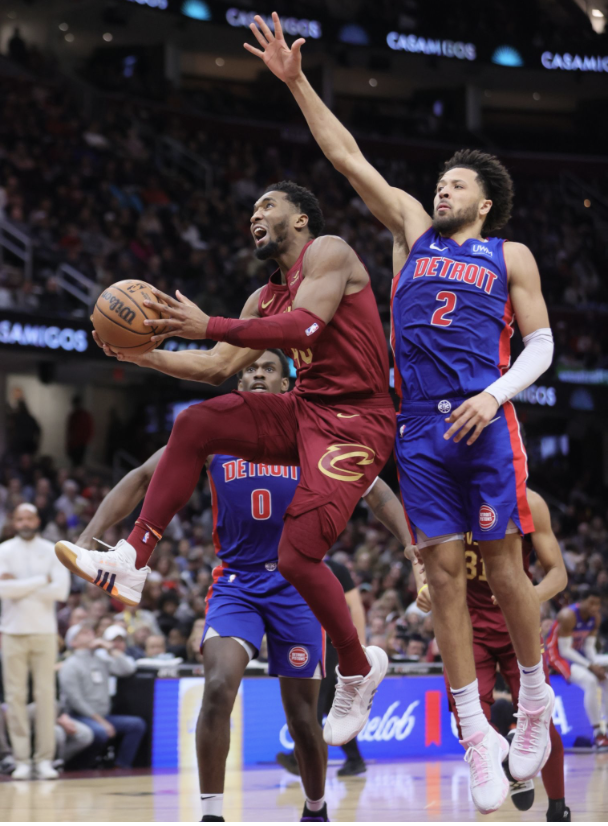
The NBA commissioner Adam Silver proposed a new rule to stop tanking because of this stacked NBA draft class, showing how generational this draft is.
All these draft pick numbers are projected, based on each team’s standings at 65 games played. These are my projections for the upcoming NBA Lottery.
The Kings are projected to be the first pick in the NBA Draft, and they take AJ Dybantsa. Dybantsa is a 6’9” freshman guard and forward from BYU with a 7’0” wingspan, who many think is the next generational talent. Dybantsa averaged 24.7 points per game (PPG) in the regular season, which was the first in the nation. This is the obvious number 1 in the draft, because of his availability, talent, and raw athleticism.
With the second pick in the NBA Draft, the Wizards select Darryn Peterson from Kansas. Peterson is a 6’6” freshman guard from Canton, Ohio, who averages 19.9 PPG in the regular season, off of 28 minutes per game. The talent is definitely there for Peterson, but the question is if he really wants to play a lot in the NBA.
Many fans have been criticizing Peterson for taking load management in college basketball. Basically, he plays for one half of the game, and even if it is a close game or not, and then he subs himself out for the rest of the game. NBA players only do this if they want to get back from an injury, but he does this most games. Peterson is an elite and efficient shotmaker and could become one in the NBA if he backs up his talent with the work ethic required.
With the third pick in the 2026 NBA draft, the Pacers select Cameron Boozer, a 6’9” freshman forward from Duke. Many think Boozer is the safest pick in the draft, and it is for a good reason because Duke is the No. 1 team in the country, and he has led them there. Boozer is a double- double machine, averaging 22.7 PPG and 10.2 rebounds per game (RPG) in the regular season, and had a double-double 17 out of 31 of the games this season.
If the last season’s eastern conference finals champions Pacers, with Pascal Siakam and Tyrese Haliburton get Cameron Boozer, they will have the piece they were missing to make it far in the playoffs.
With the fourth pick, Nets select Caleb Wilson, a 6’10” freshman forward from North Carolina. The things that stick out with Wilson is his athleticism, his length and frame, and his ability to drive to the rim. He averaged 19.8 PPG and 9.4 RPG in the regular season for the Tar Heels, before he broke his thumb in practice.
Wilson is out for the remainder of the season, but is expected to be cleared in time for the NBA combine. The downside to Wilson is his ineffective shooting ability. Wilson is just less than 26 percent from the 3 this season. If he builds off his athleticism, Wilson could have the most potential out of this entire draft class from an athletic standpoint.
With the fifth pick, the Jazz select Darius Acuff Jr., a 6’3” freshman guard from Arkansas. Acuff Jr. would be a great addition to the rotation of guards in Utah for two reasons.
First, the scoring on Acuff Jr. is elite. He averages 22.2 PPG (9th in the nation), off of 43.7 percent from three. Second, he has great playmaking, averaging 6.4 APG (17th in the nation) this season. Acuff Jr. is one of the early favorites for Rookie of the Year next year.
With the sixth pick, the Pelicans select Kingston Flemings, a 6’4” freshman guard from Houston. Flemings is a baller. He is a very streaky scorer, meaning one night he will drop 42, like against No. 12 Texas Tech, and another night he will score 4 points, like against Utah, on 2/9 shooting.
Flemings averages 16.5 PPG and 5.4 assists per game (APG), which is great for a team with depth like Houston. He has great playmaking ability, is shifty and handles the ball well, and has a nice mid range game. A downside to Flemings is his strength.
With the seventh pick, the Mavericks select Nate Ament, a 6’10” freshman forward from Tennessee. The Mavericks are lacking at the forward position, starting Naji Marshall and PJ Washington.
Ament would be the perfect fit for the Mavericks, with great scoring versatility (driving, shooting, and post) for a lengthy forward, good playmaking, and he has improved on his rebounding. Ament’s ceiling (or the best he will be in the league) has been compared to Kevin Durant, a lengthy forward who is one of the greatest scorers ever. One downside of Ament is that he needs to add on more muscle.
With the eighth pick, the Grizzlies select Hannes Steinbach, a 6’11” power forward/center from Washington. The Grizzlies need a big man to fill in for Zach Edey when he is injured and for depth at the center.
Steinbach averaged 18.6 PPG and 11.6 RPG in the regular season for the Huskies. Steinbach does the dirty work for his team, bringing physicality, rebounding, and IQ to the table, which is exactly what Grizzlies need next season.
With the ninth pick the Bulls select Yaxel Lendeborg, a 6’9” senior power forward/center. Lendeborg is a more experienced, but older prospect. Chicago is looking for a reliable big to add to the rotation and even start for them, and Lendeborg will fill that role excellently.
Last year at UAB, Lendeborg averaged 17.8 PPG and 11.2 APG, and this year averaged 14.7 PPG and 7.2 RPG in the regular season against harder competition on No. 3 Michigan, showing his consistency these past two seasons. Lendeborg is a versatile big that can do pretty much anything on the basketball court, with playmaking, shooting, rebounding, and athleticism.
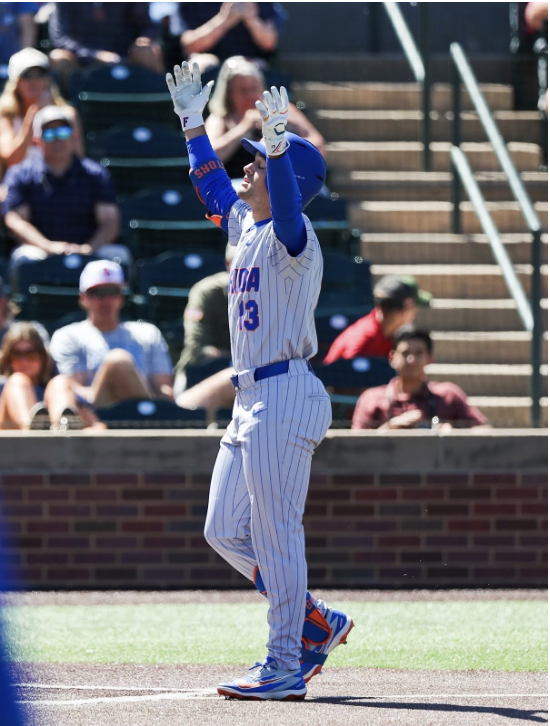
With the 10th pick, the Bucks select Thomas Haugh, a 6’9” junior forward from Florida. Haugh, a reigning March Madness champion, is a winner. Haugh averaged 17.2 PPG and 6.1 RPG this regular season. He will get it done anyway he can, with his versatility on the court, and will act like a glue player (meaning he brings his team together) for them.
He makes winning plays that make a difference no matter what team he is on, plays good defense, rebounds, and has off-ball playmaking. A downside is that Haugh doesn’t have one skill he is elite at.