
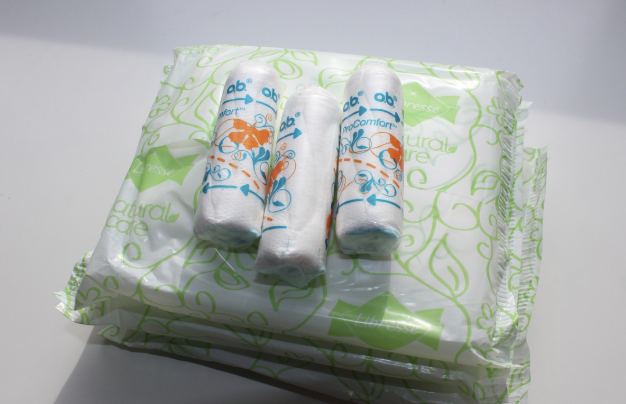
Protections for the health of incarcerated women evolve as House Bill (HB) 29 grants increased access to feminine hygiene care.
The bill was signed by Gov. Mike DeWine on Jan. 9, which when enacted, will effectively provide Ohio inmates with free menstrual products like pads or tampons. This bill, sponsored by Rep. Latyna Humphrey and Rep. Marilyn John, requires each Ohio correctional facility to create their own formal policies about the issuance of menstrual products to inmates. The bill also ensures that county and municipal facilities allow menstruating inmates to have one hot shower a day, according to the Ohio House of Representatives.
“By ensuring that incarcerated women receive these basic necessities, we affirm their dignity, protect their health, and take one more step toward a more humane corrections system,” Humphrey said, according to the Ohio House of Representatives.
Sections 341.261, 753.321 and 5120.631 of the Ohio Revised Code regarding feminine hygiene products in county, municipal, and state correctional facilities respectively will officially go into effect on March 20, 2026. HB 29 will ensure that inmates that experience a menstrual cycle are provided with hygiene products based on their individual needs with no costs, according to the Ohio Laws Legislative Commission.
Before this piece of state legislation was crafted, many state institutions were not suitably equipped with hygiene products specific to menstruation, despite federal legislation implemented in 2018 that requires federal prisons to provide menstrual products to those who experience menstruation.
“Women were forced to hoard products in their personal areas out of fear of not having anything during their next cycle. If staff believed you were using ‘too many,’ you were told to buy more from commissary,” Gina Tasitch, who was formerly incarcerated at the Ohio Reformatory for Women said, according to NBC4.
Access to feminine hygiene products inside correctional facilities is an issue of human rights and public healthcare. Without proper access to pads and tampons, inmates may have to resort to unsafe measures such as contaminated cloths or used menstrual products. These compromises pose a risk of infection or irritation, which could result in extra mental stress and expenditures.
At the national level, advocates for menstrual product accessibility demand federal legislation to reduce complications that may arise when inmates move between states with different policies. Critics, however, worry about the depletion of local, state, and federal funds directed towards this purpose, along with environmental effects.
Limited access to menstrual products is not just an issue in correctional facilities. Public restrooms and schools in Ohio also lack adequate or direct access to free menstrual products. All public, chartered, community, and STEM schools that enroll biological females in grades six through 12 are required to provide free menstrual products in their facilities as per Ohio law, according to the Ohio Department of Education & Workforce.
However, the application of this law is dependent on each school or school district’s individual policies. At Olentangy Berlin, free menstrual products are available in the school nurse’s office, while the Bear Necessities club focuses on bathroom supply.
“I would hope that we can eventually get to a point where all states, all districts, all school systems, essentially, can be providing that, especially for younger women,” Mrs. McClellan, advisor of Bear Necessities said.
As HB 29 moves to take effect, officials of Ohio prisons and jails provide individuals who menstruate with basic access to healthcare.
“We need to normalize that these are just healthcare products,” Mrs. Thornberry, Bear Necessities advisor said.